If you’ve been curious about homemade probiotic drinks, you’re not alone. Fizzy kombucha, creamy milk kefir, and zippy ginger soda have moved from specialty shops to everyday kitchens because they’re inexpensive, customizable, and packed with live cultures that can support digestion. In this guide, I’ll show you the simplest ways to make gut-friendly fermented beverages at home—no fancy equipment required—along with safety tips, flavor ideas, and a step-by-step recipe card you can save.
Table of Contents
What Are Probiotic Drinks?
Probiotic drinks are beverages that contain beneficial microorganisms—typically lactobacilli, bifidobacteria, and friendly yeasts—formed during fermentation. In the presence of sugars, these microbes produce acids and natural carbonation that create tang, fizz, and a longer shelf life. When consumed as part of a varied diet, fermented drinks can contribute helpful live cultures (aka “probiotics”).
For an authoritative overview of probiotics, see the NIH/NCCIH resource “Probiotics: What You Need to Know.”
Why Make Them at Home?
- Budget-friendly: A gallon of kombucha or a quart of kefir costs pennies compared to store-bought.
- Custom flavor: Add fruit, herbs, and spices you love, from strawberry-lime to chai.
- Control the sweetness: Ferment longer for less sugar, shorter for more sweetness.
- Low equipment: A clean jar, breathable cover, and a strainer are enough to start.
- Meal-prep friendly: Brew a batch on Sunday and enjoy all week.
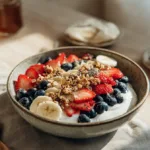
If you love quick breakfasts and snacks, pair these drinks with our Greek Yogurt Blueberry Breakfast Bowl or keep it savory with a Vegetarian Burger Bowl—both budget wins.
Safety & Fermentation Basics
Fermentation is safe and simple when you keep things clean and pay attention to smell, sight, and taste.
Cleanliness: Wash hands, jars, and tools. Avoid soap residue and anything rusty.
Water: Use filtered or dechlorinated water; chlorine can inhibit fermentation.
Temperature: Room temp (68–75°F) is the sweet spot. Cooler temps slow things down; warmer temps speed them up.
Visual cues:
- Healthy: Pleasantly sour, yeasty, or fruity aroma; active bubbles; a new SCOBY layer for kombucha; creamy kefir that separates slightly.
- Off: Fuzzy mold on the surface (blue, green, pink, black), rotten or cheesy odor (not the mild kefir tang), or slimy, discolored cultures—discard and start fresh.
Medical note: People who are immunocompromised or pregnant should consult a clinician before consuming unpasteurized fermented beverages. (General guidance echoed by major U.S. health organizations.)
Starter Cultures You’ll Use
- SCOBY (Symbiotic Culture of Bacteria & Yeast): For kombucha.
- Kefir grains: For live cultures milk kefir (they look like tiny cauliflower florets).
- Ginger bug: A simple jar of grated ginger, sugar, and water fed daily until bubbly—used to create ginger soda and homemade root beer.
- Whey or kefir “starter”: A splash of kefir or yogurt whey can jumpstart certain ferments or add probiotics to smoothies.
Five Drinks to Try
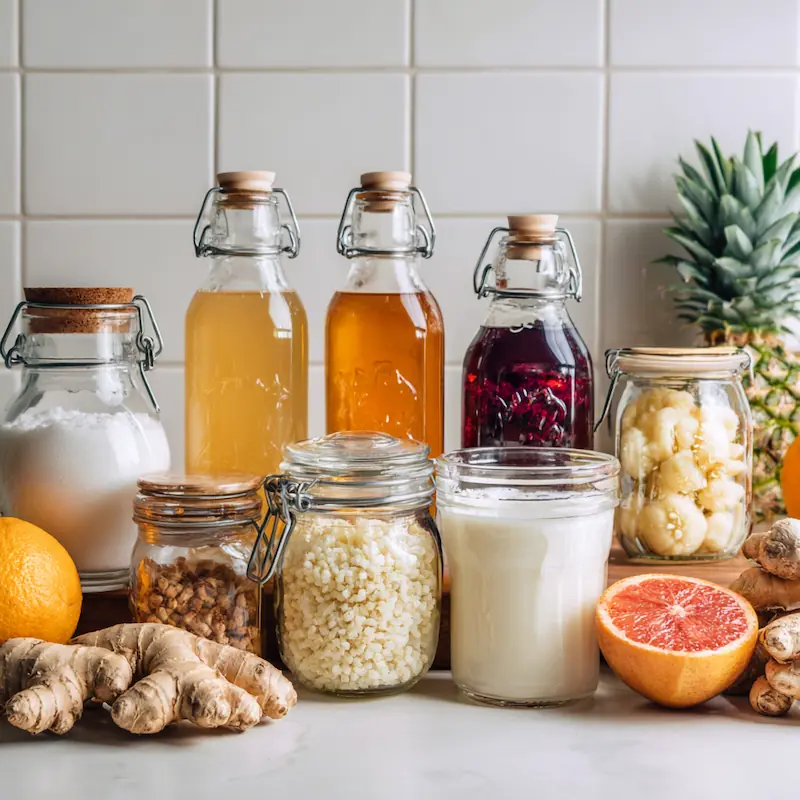
Kombucha
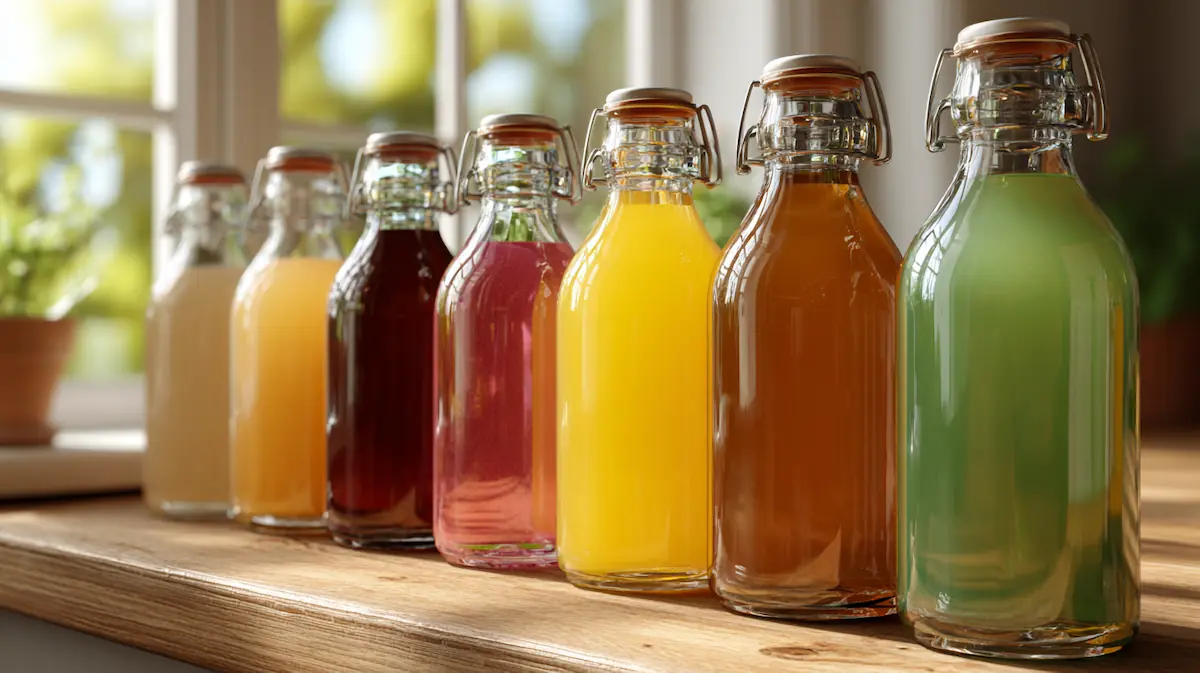
The classic fermented probiotic beverage made from sweet tea and a SCOBY. First ferment (F1) yields tart, lightly fizzy tea. For flavor and sparkle, bottle with fruit or juice for a second ferment (F2).
Flavor ideas: strawberry basil, peach-ginger, blackberry-mint.
Live Cultures Milk Kefir + Second Ferment
Milk kefir is a pourable, tangy drink similar to drinkable yogurt. Ferment 18–24 hours for a milder flavor, or longer for extra tang. After straining the grains, bottle the kefir with fruit peels, vanilla, or citrus for a second ferment milk kefir (aka 2nd ferment milk kefir) that’s extra creamy and aromatic.
Flavor ideas: vanilla bean + orange peel, cinnamon-maple, blueberry-lemon.
Ginger Soda (Ginger Bug)
Ginger soda is the easiest gateway ferment. The ginger bug acts like a DIY soda culture, turning sweetened ginger-lemon water into a lightly alcoholic (very low), bubbly refresher.
Flavor ideas: lemon-lime, pineapple-ginger, raspberry-ginger.
Homemade Root Beer (Fermented Style)
Old-school homemade root beer uses roots and spices (like sarsaparilla, sasparilla substitutes, wintergreen, birch, licorice) plus a ginger bug for carbonation. The result is nostalgic and naturally probiotic.
Probiotic Smoothie Ideas
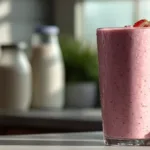
Blend ½–1 cup kefir with fruit for a probiotic smoothie (great for breakfast). Try our tested Probiotic Smoothies or go high-protein with Greek Yogurt Smoothie. For a fun dessert-meets-breakfast, see Protein Cupcakes—they pair surprisingly well with tangy kefir on the side.
Step-by-Step Recipes
Below are streamlined methods. The printable, structured recipe card appears at the end for easy saving.
1) Basic Kombucha (F1 + F2)
You’ll need: 1-gallon glass jar, breathable cover (coffee filter/cloth + rubber band), funnel, swing-top bottles.
Ingredients: 14–16 cups water, 1 cup sugar, 6–8 tea bags (black/green), 1 SCOBY + 1–2 cups unflavored starter kombucha.
Steps:
- Brew sweet tea: Boil half the water; dissolve sugar; steep tea 10–15 minutes. Add remaining cool water to bring to room temp.
- Pitch: Pour into clean jar, add starter tea, then gently add SCOBY. Cover.
- Ferment (F1): 7–10 days at room temp. Taste day 7; when sweet-tart, it’s ready.
- Bottle (F2): Remove SCOBY (save 2 cups for next batch). Pour kombucha into bottles with 1–2 tbsp mashed fruit or 2–4 tbsp juice per 16 oz.
- Carbonate: 1–3 days at room temp (burp daily), then refrigerate.
Pro tip: Warmer rooms shorten F1; cooler rooms lengthen it.
2) Live Cultures Milk Kefir + Second Ferment
You’ll need: 1-quart jar, plastic/nylon strainer (avoid reactive metals), bottles for F2.
Ingredients: 4 cups milk (whole for creamy, 2% for lighter), 1–2 tbsp kefir grains.
Steps:
- Combine: Add grains to milk in a jar; cover with a breathable lid or loose cap.
- Ferment: 18–24 hours at room temp until tangy and slightly thick.
- Strain: Place strainer over a bowl; gently stir to let kefir flow through, catching grains.
- Second ferment (optional): Bottle the strained kefir with citrus peel, vanilla, or fruit for 12–24 hours; then chill.
- Re-feed grains: Return grains to fresh milk for the next batch.
Pro tip: If it separates (curds/whey), it’s likely over-fermented—just whisk and use in smoothies, or shorten the next batch.
3) Ginger Soda (with Ginger Bug)
Make the bug (starter):
- Day 1: Combine 2 tbsp grated ginger (skin on), 2 tbsp sugar, and ½ cup water in a clean jar.
- Days 2–5: Feed daily with 1 tbsp ginger + 1 tbsp sugar + 1–2 tbsp water, stirring. When it smells fruity and bubbles actively, it’s ready.
Soda batch:
- In a pitcher, mix 4 cups water, ¼–⅓ cup sugar (to taste), ¼ cup lemon juice, and ½–1 cup active ginger bug (strained).
- Funnel into swing-top bottles; leave 1–2 inches headspace. Ferment 24–72 hours (burp daily) until very fizzy; refrigerate.
Pro tip: Warmer weather = faster fizz. If carbonation lags, add an extra spoon of bug to each bottle.
4) Fermented Homemade Root Beer
Syrup: Simmer a blend such as 1 tbsp dried sassafras or safe root-beer herbs, 1 tsp wintergreen leaf, 1 tsp licorice root, and ½ cup sugar in 4 cups water for 15–20 minutes; cool and strain. (Use commonly sold “root beer” herb blends; avoid wild foraging unless you’re expert.)
Bottle & ferment: Mix cooled syrup with 3–4 more cups water and ½–1 cup active ginger bug. Bottle and ferment 24–48 hours, then chill.
5) Probiotic Smoothie (Kefir Base)
Blend 1 cup milk kefir, 1 frozen banana, ½ cup berries, and 1 tbsp peanut butter. For savory lovers, add a splash of sauerkraut brine for a fermented vegetables probiotic twist. For more ideas, see our full Probiotic Smoothies post.
Troubleshooting & Pro Tips
No bubbles?
- Warmer spot, longer time, or add a pinch more sugar. In ginger soda/root beer, your bug may be underfed—give it a day or two with daily feeds.
Too sour?
- Shorten the ferment next time. Balance with a splash of fruit juice during bottling.
White film on kombucha?
- Likely new SCOBY growth (harmless). Mold is raised and fuzzy with bright colors—discard if you see that.
Metal tools?
- Brief contact with stainless steel is usually fine, but avoid long exposure. Stick with glass, plastic, wood, or silicone when possible.
Meal-prep advantage:
- Brew on weekends; bottle midweek. Label bottles by date and flavor. Kefir makes perfect overnight oats—try Cinnamon Roll Overnight Oats and swap part of the milk for kefir.
FAQ
1) Are homemade probiotic drinks safe?
Yes—when you use clean equipment, follow instructions, and discard anything with mold or off odors. Store finished drinks in the fridge. If you’re immunocompromised or pregnant, speak with a clinician before consuming unpasteurized ferments (general guidance reflected by U.S. health authorities, such as NIH/NCCIH).
2) What’s the difference between probiotic and fermented?
Fermented drinks are created by microbes converting sugars; probiotic refers to live microorganisms that, when consumed in adequate amounts, may confer a health benefit. Many fermented drinks are probiotic if they’re not heat-treated after fermenting.
3) How much should I drink daily?
Start small—¼ to ½ cup—then build to 1 cup per day as tolerated. Too much too fast may cause temporary bloating as your gut adjusts.
4) Which drink has the most probiotics?
Milk kefir is typically richer in diverse cultures than kombucha. Kombucha still delivers beneficial acids and yeasts and is lower in dairy, which some prefer.
5) Can I make these sugar-free?
The microbes need sugar to ferment. Much of it is consumed during fermentation, but the end drink still contains some sugar. For lower sugar, ferment longer and flavor with fruit instead of extra syrup.
6) Can I use non-dairy milk for kefir?
Yes—coconut or soy milk can work, but kefir grains thrive best in dairy. Refresh grains in dairy between non-dairy batches to keep them strong.
7) How long do finished drinks last?
Refrigerated, kombucha and kefir are best within 1–3 weeks; ginger soda/root beer within 1–2 weeks. They’ll continue to slowly ferment in the fridge and may get tangier.
8) What’s second ferment milk kefir?
After straining out the grains, you bottle kefir with flavorings for 12–24 hours at room temp. This second ferment boosts aroma, reduces lactose further, and can create gentle carbonation.
Conclusion
Homemade probiotic drinks are one of the easiest, most affordable ways to add live cultures to your routine. Start with ginger soda for a fast win, keep a steady rotation of kombucha for fizz, and lean on milk kefir for smoothies and breakfasts. With a few jars and a little patience, you’ll have a mini fermentation station that saves money and tastes amazing.
Craving more gut-friendly ideas? Mix and match with our Probiotic Smoothies and Probiotic Yogurt Bowl—then keep hydrated with Electrolyte Water while your next batch bubbles away.
Homemade Probiotic Drinks Guide
Ingredients
Equipment
Method
- Kombucha (First & Second Ferment): Brew sweet tea, cool to room temp. Add SCOBY and starter kombucha. Cover and ferment 7–10 days. Bottle with fruit for second ferment, leave 1–3 days, refrigerate.
- Milk Kefir: Add kefir grains to milk. Ferment 18–24 hours. Strain grains. Optionally second ferment with flavors for 12–24 hours.
- Ginger Bug: Combine ginger, sugar, and water. Feed daily with more ginger, sugar, and water for 5 days. Once bubbly, use in sodas.
- Ginger Soda: Mix lemon juice, water, sugar, and strained ginger bug. Bottle 24–72 hours, then chill.