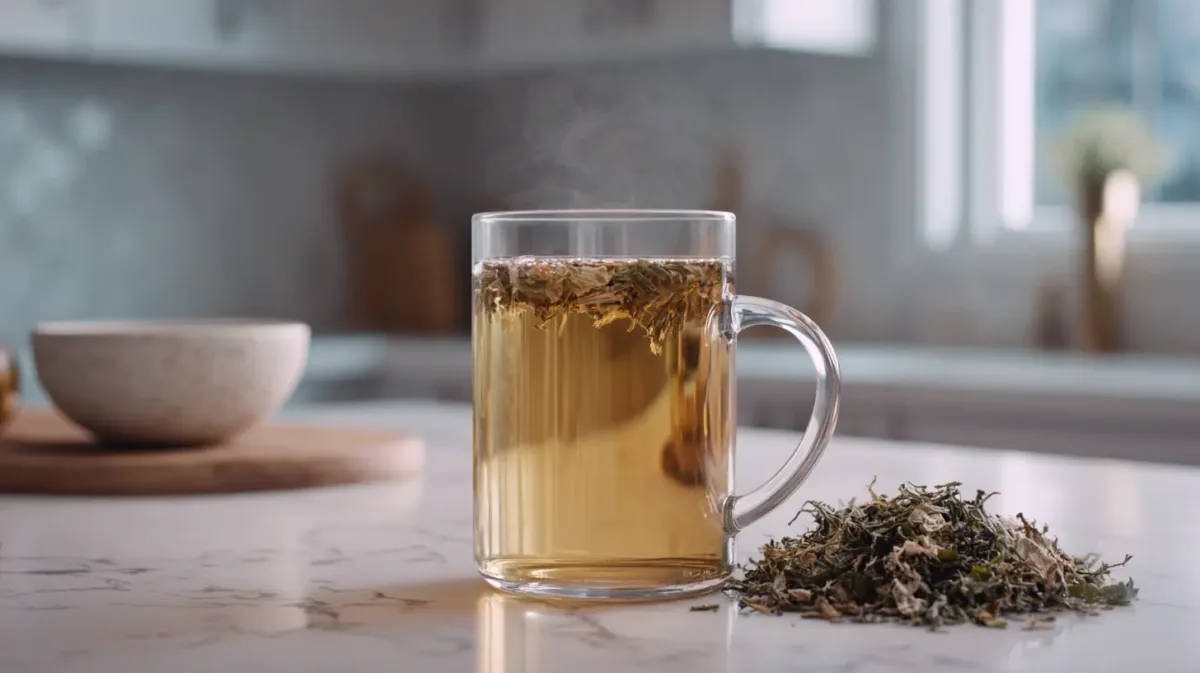
Dandelion tea is an easy herbal tea made from dandelion root, leaves, or flowers, with a naturally earthy, slightly bitter flavor.
It’s cozy, budget-friendly, caffeine-free, and simple to make at home in just a few minutes.
Scroll Down for the Recipe Card 👇
Dandelion tea is made by steeping dried dandelion root, fresh dandelion leaves, or dandelion flowers in hot water. It tastes earthy and gently bitter, and many people enjoy it as a caffeine-free herbal drink after meals.
Table of Contents
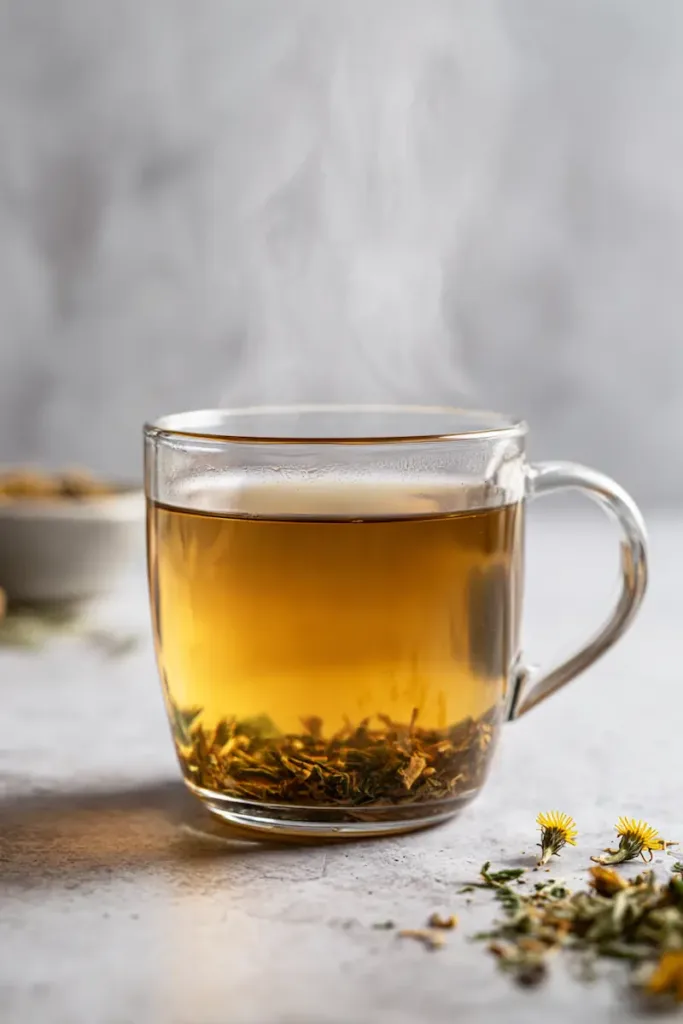
Easy Dandelion Tea Recipe for a Cozy Herbal Drink
Dandelion tea is one of those simple herbal drinks that feels old-fashioned in the best way. It does not need fancy equipment, expensive ingredients, or complicated steps. All you really need is dandelion, hot water, and a few minutes.
You can make dandelion tea three main ways:
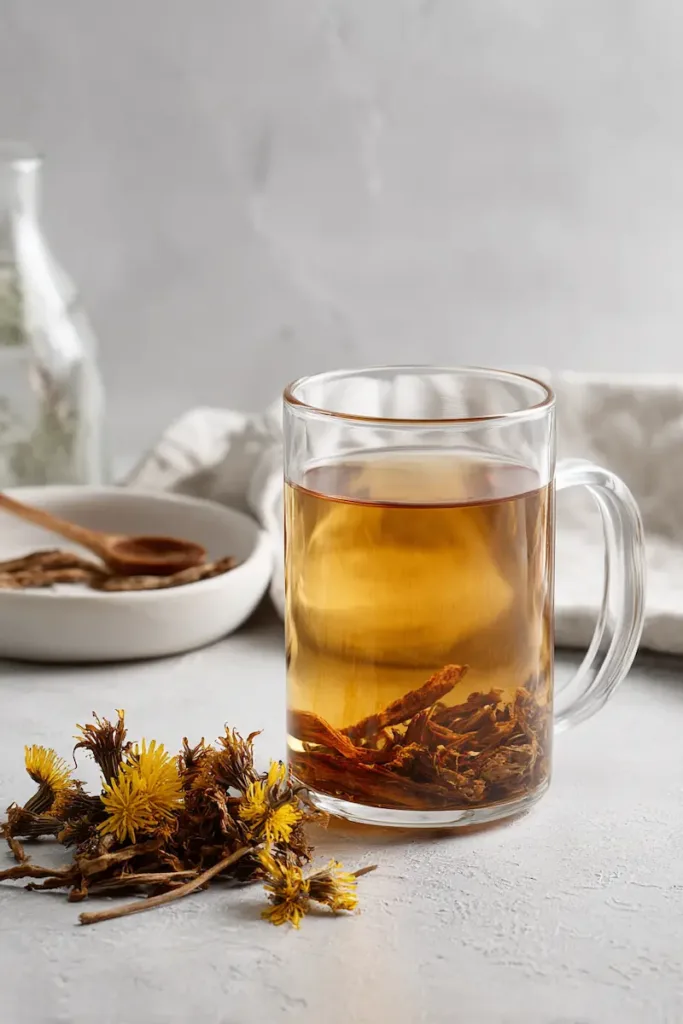
- With roasted dandelion root for a deep, coffee-like flavor
- With dandelion leaves for a greener, more herbal taste
- With dandelion flowers for a lighter, softer cup
The most popular version is usually roasted dandelion root tea because it has a bold, toasty taste. Some people even use it as a caffeine-free coffee alternative, especially when brewed strong.
To make dandelion tea, steep 1 to 2 teaspoons of dried dandelion root or leaves in 8 ounces of hot water for 5 to 10 minutes. Strain, then sweeten with honey or lemon if desired. Roasted root gives the strongest, richest flavor.
Dandelion has been traditionally used in herbal preparations, but it is best enjoyed as a simple food-style tea rather than treated like a cure. The National Center for Complementary and Integrative Health notes that dandelion roots and leaves are used in teas, capsules, and extracts, and that people should talk with a health care provider if taking medications because interactions are possible.
Best Ways to Make Dandelion Tea
There are a few ways to make dandelion tea, and each one gives you a slightly different flavor.
Best Roasted Dandelion Root Tea
Roasted dandelion root tea is rich, dark, and earthy. It has a slightly nutty flavor and can taste a little like mild coffee or roasted barley tea.
This is the best option if you want:
- A caffeine-free coffee alternative
- A cozy evening drink
- A stronger herbal flavor
- A tea that pairs well with milk or cinnamon
Easy Dandelion Leaf Tea
Dandelion leaf tea tastes greener and more grassy. It is lighter than root tea and can have a pleasantly bitter edge.
This version is best if you like:
- Green herbal teas
- Lemon in tea
- A lighter afternoon drink
- Simple garden-style flavors
Delicious Dandelion Flower Tea
Dandelion flower tea is softer and more delicate. It is usually less bitter than leaf tea and can taste lightly floral.
This is a nice choice for:
- Springtime tea
- Gentle herbal blends
- Honey-sweetened tea
- A pretty golden cup
Simple Step-by-Step Dandelion Tea Recipe
Ingredients
- 1 to 2 teaspoons dried dandelion root, leaf, or flower
- 1 cup water
- 1 teaspoon honey or maple syrup, optional
- 1 lemon slice, optional
- Pinch of cinnamon or ginger, optional
Instructions
- Heat the water. Bring 1 cup of water almost to a boil.
- Add dandelion. Place dried dandelion root, leaves, or flowers in a mug or tea infuser.
- Steep. Pour hot water over the dandelion and steep for 5 to 10 minutes.
- Strain. Remove the tea infuser or strain the tea through a fine mesh sieve.
- Flavor. Add honey, lemon, cinnamon, ginger, or mint if desired.
- Serve warm. Sip slowly and adjust the strength next time based on your taste.
Make dandelion tea by steeping dried dandelion root or leaves in hot water for 5 to 10 minutes. Use 1 teaspoon for a mild cup or 2 teaspoons for a stronger brew. Strain well, then add lemon or honey to balance the natural bitterness.
Dandelion Tea
Ingredients
Equipment
Method
- Bring 1 cup of water almost to a boil.
- Place the dried dandelion root, leaves, or flowers in a mug or tea infuser.
- Pour the hot water over the dandelion and steep for 5 to 10 minutes.
- Remove the tea infuser or strain the tea through a fine mesh sieve.
- Add honey, lemon, cinnamon, ginger, or mint if desired.
- Serve warm and adjust the strength next time based on your taste.
Notes
Tried this recipe?
Let us know how it was!After you make this dandelion tea, try this soothing lemon balm tea recipe for another easy caffeine-free herbal drink you can enjoy warm or iced.
For Stronger Roasted Dandelion Root Tea
For a bolder tea, simmer the root instead of simply steeping it.
- Add 1 tablespoon roasted dandelion root to a small saucepan.
- Pour in 1 ½ cups water.
- Simmer gently for 10 to 15 minutes.
- Strain and serve warm.
This makes a darker, more intense tea with a roasted flavor.
Delicious Flavor Variations
Dandelion tea can be a little bitter on its own, so flavor additions help balance it.
Delicious Lemon Honey Dandelion Tea
Add:
- 1 teaspoon honey
- 1 lemon slice
- Optional pinch of ginger
This is bright, soothing, and beginner-friendly.
Comfort Cinnamon Dandelion Tea
Add:
- ¼ teaspoon cinnamon
- Splash of milk or oat milk
- Tiny drizzle of maple syrup
This version tastes cozy and warm, especially with roasted dandelion root.
Healthy Ginger Dandelion Tea
Add:
- 2 thin slices fresh ginger
- Lemon juice
- Honey, optional
Ginger gives the tea a warming flavor and helps cover some of the bitterness.
Iced Dandelion Tea
To make iced dandelion tea:
- Brew the tea slightly stronger than usual.
- Let it cool.
- Pour over ice.
- Add lemon, mint, or orange slices.
This is a refreshing warm-weather version.
Creamy Dandelion Latte
Use roasted dandelion root tea as the base.
Add:
- Warm milk or oat milk
- Cinnamon
- Vanilla extract
- Maple syrup
It will not taste exactly like coffee, but it gives you a cozy, roasted drink without caffeine.
Perfect Tips for Brewing Dandelion Tea
Use the Right Amount
Start with 1 teaspoon per cup if you are new to dandelion tea. It can be bitter, especially if you use leaves.
For a stronger cup, use 2 teaspoons or simmer the root.
Do Not Oversteep Leaf Tea
Dandelion leaf tea can become very bitter if steeped too long. Start with 5 minutes, taste, then steep longer only if needed.
Balance Bitterness
Dandelion’s bitterness is part of its natural flavor, but you can soften it with:
- Honey
- Lemon
- Cinnamon
- Mint
- Ginger
- Milk or oat milk
Choose Roasted Root for a Coffee-Like Flavor
If you are hoping for a dark, bold drink, roasted root is the best choice. Leaves and flowers are much lighter.
Buy From a Trusted Source
For convenience and safety, choose food-grade dried dandelion tea from a reputable brand. This helps avoid contamination from pesticides or polluted areas.
Common Mistakes to Avoid
Using Dandelions From Sprayed Lawns
This is the biggest mistake. Dandelions growing in yards, parks, or sidewalks may have been exposed to chemicals. Only use fresh dandelions from clean, unsprayed areas.
Expecting It to Taste Sweet
Dandelion tea is naturally earthy and bitter. It is not fruity or sweet unless you add honey, lemon, or spices.
Brewing It Too Strong the First Time
Start mild. You can always make the next cup stronger.
Treating It Like Medicine
Dandelion tea can be part of a balanced routine, but it should not be used as a replacement for medical care. NCCIH notes that dandelion may interact with some medicines, including drugs related to blood sugar, blood thinning, and water pills.
Ignoring Allergies
Dandelion belongs to the Asteraceae plant family, which also includes ragweed, daisies, and chrysanthemums. People sensitive to related plants may want to be careful and ask a health professional before using dandelion products. Memorial Sloan Kettering also notes possible allergic reactions and medication concerns with dandelion.
Budget-Friendly Storage and Meal Prep Tips
Dandelion tea is easy to prep ahead, especially if you like iced herbal tea.
Store Dried Dandelion Properly
Keep dried dandelion root, leaves, or flowers in:
- An airtight jar
- A cool pantry
- A dark cabinet
- A dry area away from steam
Avoid storing tea near the stove because heat and moisture can weaken flavor.
Make a Small Batch of Iced Tea
Brew 3 to 4 cups at once, cool it, and store it in the fridge.
Use within 2 to 3 days for the freshest flavor.
Prep Flavor Add-Ins
Keep sliced lemon, fresh mint, or ginger ready in the fridge. This makes it easier to build a better cup without extra effort.
Make Tea Bags Ahead
Add dried dandelion to empty tea filter bags and store them in a jar. This is helpful for busy mornings or quick evening tea.
Is Dandelion Tea Healthy?
Dandelion tea can be a healthy caffeine-free drink when enjoyed in normal food-like amounts. It is naturally low in calories if you do not add sugar, and it can be a comforting alternative to sweet drinks.
That said, health claims around dandelion tea should be kept realistic. Dandelion has a long history of traditional use, but many claims need more human research. A 2025 review on dandelion and liver health concluded that preclinical studies are promising, but more clinical trials are needed to confirm safety and effectiveness in humans.
High-Protein Benefits
Dandelion tea itself is not a high-protein drink. Herbal tea is mostly water, so it does not provide meaningful protein.
To make it part of a higher-protein snack, pair it with:
- Greek yogurt
- Eggs
- Cottage cheese
- Turkey toast
- Peanut butter toast
- A protein-rich breakfast bowl
This makes the tea part of a more balanced meal.
Calories and Balanced Diet Benefits
Plain dandelion tea is typically very low in calories because it is brewed from herbs and water. Calories mainly come from add-ins like honey, maple syrup, milk, or creamer.
For a balanced diet, keep sweeteners light and pair your tea with real food if you need energy.
Healthy Meal Pairing Ideas
Dandelion tea pairs well with:
- Oatmeal with nuts
- Avocado toast
- Scrambled eggs
- Soup and whole-grain bread
- A simple chicken salad
- Yogurt with berries
The tea adds warmth and flavor, while the meal provides protein, carbs, fat, and fiber.
Calories and Nutrition Facts
The nutrition of dandelion tea depends on how much plant material is used and whether you add sweeteners. Plain brewed tea usually contributes very few calories.
Dandelion greens themselves contain vitamins and minerals, but brewed tea is not the same as eating the whole greens. USDA FoodData Central provides nutrition data for dandelion greens as a food, but tea will contain much smaller and more variable amounts depending on steeping strength.
Estimated Nutrition for Plain Dandelion Tea
For 1 cup plain brewed dandelion tea:
- Calories: Very low
- Protein: Minimal
- Fat: 0 g
- Carbohydrates: Minimal
- Caffeine: 0 mg, if pure dandelion tea
- Added sugar: 0 g, unless sweetened
With Honey or Milk
Add-ins change the nutrition:
- Honey adds sugar and calories
- Milk adds calories, protein, and fat depending on type
- Oat milk or almond milk varies by brand
- Maple syrup adds sugar and calories
For the lightest version, use lemon instead of sweetener.
Is Dandelion Tea Good for Weight Loss?
Dandelion tea may fit into a weight loss friendly routine because it is caffeine-free, low in calories, and can replace higher-calorie drinks. However, it does not directly cause fat loss on its own.
Snippet-Ready Answer:
Dandelion tea can be weight loss friendly when served plain because it is very low in calories. It may help replace sugary drinks, but it should not be treated as a weight loss cure. Balanced meals, enough protein, movement, and sleep matter more.
Weight Loss Friendly Drink Swap
Dandelion tea can replace:
- Sugary coffee drinks
- Sweet bottled teas
- Soda
- Heavy cream-based drinks
This can reduce added sugar, especially if you drink it plain or lightly sweetened.
Important Safety Note
Some people use dandelion because it may have diuretic effects, meaning it may increase urination. That is not the same as fat loss. Memorial Sloan Kettering notes that dandelion’s diuretic activity may be related to potassium content, and NCCIH advises caution with possible medication interactions.
FAQs About Dandelion Tea
What does dandelion tea taste like?
Dandelion tea tastes earthy, herbal, and slightly bitter. Roasted dandelion root has a deeper, toastier flavor, while leaf tea tastes greener and more grassy.
If the flavor is too bitter, add lemon, honey, cinnamon, mint, or ginger.
How do you make dandelion tea taste better?
The easiest way to make dandelion tea taste better is to add lemon and honey. Cinnamon, ginger, mint, and a splash of milk also help balance the earthy bitterness.
Roasted dandelion root usually tastes smoother than dandelion leaf tea.
Can you drink dandelion tea every day?
Some people drink dandelion tea regularly in food-like amounts, but daily use may not be right for everyone. People taking medications, pregnant or breastfeeding individuals, and those with allergies should ask a health professional first.
NCCIH notes that little is known about safety in amounts greater than those found in foods during pregnancy or breastfeeding.
Is dandelion tea caffeine-free?
Yes, pure dandelion tea is naturally caffeine-free. That makes it a good option for evenings or for anyone avoiding caffeine.
Always check the label if you buy a blend, because some tea blends may include black tea, green tea, or yerba mate.
What part of the dandelion is used for tea?
Dandelion tea can be made from the root, leaves, or flowers. Roasted root makes the darkest and boldest tea, leaves make a greener tea, and flowers make a lighter floral tea.
Many store-bought dandelion teas use roasted root.
Can I make dandelion tea from my yard?
You can make dandelion tea from your yard only if the plants are from a clean, unsprayed area. Do not use dandelions exposed to pesticides, herbicides, roadside pollution, or pet waste.
When unsure, use food-grade dried dandelion from a trusted source.
Who should avoid dandelion tea?
People taking medications, especially blood thinners, diabetes medications, lithium, or diuretics, should ask a health care provider before using dandelion tea. People with allergies to related plants should also be cautious.
Dandelion can interact with some medications, and herbal products may affect how medicines work.
Conclusion
Dandelion tea is a simple, cozy herbal drink that can be made with roasted root, leaves, or flowers. It is earthy, naturally caffeine-free, budget-friendly, and easy to customize with lemon, honey, ginger, cinnamon, or mint.
Save this dandelion tea recipe for the next time you want a warm, soothing drink without caffeine, and try it this week with your favorite light snack or breakfast.
Loved this dandelion tea? Save it for your next cozy drink moment, then check out this easy matcha tea guide for another simple homemade tea idea.